Fraud, Romance and Flowers
- NEWS
Rockaway Stuff
- 0
- 6 minutes read
By Dan Guarino
Valentine’s might be one day dedicated to romance, but romance scammers are hard at work all year long.
Many “imposter scammers” will pretend to represent government agencies, charities, tech support services, contests, even people you know. Through phone calls, messaging, emails, etc., they use phony threats of account shutdowns, imminent legal trouble, or reports of relatives in trouble needing immediate funds to panic victims into sending them money or giving bank account or personal information or computer access.
In 2025, senior advocacy organization AARP found 41 percent of Americans surveyed had “money stolen due to fraud or sensitive information obtained and used fraudulently.” The Federal Trade Commission (FTC) in 2024 reported $12.5 billion was lost to such fraud, but due to underreporting, states’ totals could be as high $158 billion.
But with romance scams, the goal is to reel victims in slowly with familiarity, flirting, and sweet talk. The FBI notes, “In romance scams, a criminal uses a fake online identity to gain a victim’s affection and trust. (They) then use the illusion of a romantic or close relationship to manipulate and/or steal from the victim.”
AARP cites currently some 11 million Americans age 50+ have “made what they believed to be a romantic connection online and were ultimately asked for financial help or encouraged to invest in cryptocurrency, leading to often severe financial and emotional distress.”
But no age group or gender is safe from these types of schemes.
Many Rockaway/Broad Channel residents have reported frequent messages, supposedly from attractive looking women or men, often boasting high profile occupations and overseas locations. Messages like “You seem very interesting,” “I tried sending you a friend request but it wouldn’t go through,” “Your name keeps popping up on my friend suggestion list,” or “Please reply to me so we can connect,” are designed to arouse potential targets’ interest.
Using social media, dating apps and other outlets, scammers carefully develop a relationship with their target to eventually defraud them out of money and personal information.
One woman shared her story of meeting a man, who claimed to be a lawyer, via an online dating site. “He said he was in Moscow, Russia, but somehow, we matched. We quickly clicked and bonded.”
His technique, she said later, was to lead her in “sharing personal stories with me, about his family, how he grew up, how he treasured his father. He even sent me photos of himself.” His communications also became more affectionate and seemingly loving.
Eventually he shared that “an uncle” had taught him how to profitably trade in bitcoin, and he would be happy to show her how also. All he needed was access to her bank account.
When she said she’d have to call her bank to get the codes, he became irate. That’s when she slammed on the brakes, and on closer examination, his story began to fall apart. Even his geolocation did not put him either in Moscow, or Chicago where he said his uncle lived, but in Bangladesh.
Besides working to get victims to reveal personal information, passwords, gain bank, investment or savings access, or lure them into investment scams, romance scammers may also request money or gift cards to visit or settle business affairs. Or request private information or explicit photos, to use to blackmail the victim through what is called “sextortion.”
What are some red flags to look out for and how can you protect yourself?
The FBI states “criminals who carry out romance scams are experts at what they do and will seem genuine, caring, and believable. Con artists are present on most dating and social media sites.” So be careful when using these apps. They know people there are already looking for connection.
“Be careful what you post and make public online,” they say. “Scammers can use details shared on social media and dating sites to better understand and target you.”
“Only use dating sites with well-known reputations.” Also research the person’s photo and profile using online searches to see if that material has been used elsewhere. Or if it contains vague or scant information, few photos (what real account doesn’t have overabundance of photos/posts?) and profile images that don’t match or where the person looks like a model. Many male scammers, for instance, will pose as attractive, upper-ranking military members. Women may appear “extra” beautiful or sexy.
The FTC cautions to be wary of romantic contacts who say “they can’t meet you in person. They might say they’re living or traveling outside the country, working on an oil rig, in the military, or working with an international organization.” Or have some other reason why they can’t travel.
Also “if the individual promises to meet in person, but then always comes up with an excuse about why he or she can’t,” the FBI says. “If you haven’t met the person after a few months, for whatever reason, you have good reason to be suspicious.
“Beware if the individual attempts to isolate you from friends and family…” Or if they request to take your online conversation to more “private” sites, like WhatsApp or text.
Likewise, “never send money to anyone you don’t know personally. If you don’t know them, don’t send money,” and “never help anyone move money through your account or another person’s account.”
Finally, the FTC warns once scammers gain your trust, “they’ll ask for your help to pay medical expenses for themselves or a family member, buy their ticket to visit you, pay for their visa, or help them pay fees to get them out of trouble. They may even offer to help you get started in cryptocurrency investing.
“All scammers, not just romance scammers, want to get your money quickly,” the FTC says.
“They’ll tell you to wire money through a company like Western Union or MoneyGram, put money on gift cards…and give them the PIN codes, send money through a money transfer app, or transfer cryptocurrency.”
These people aren’t looking to steal your heart, just your money.
Yes, Valentine’s Day reminds us finding love is grand. Just be careful where you look for it.
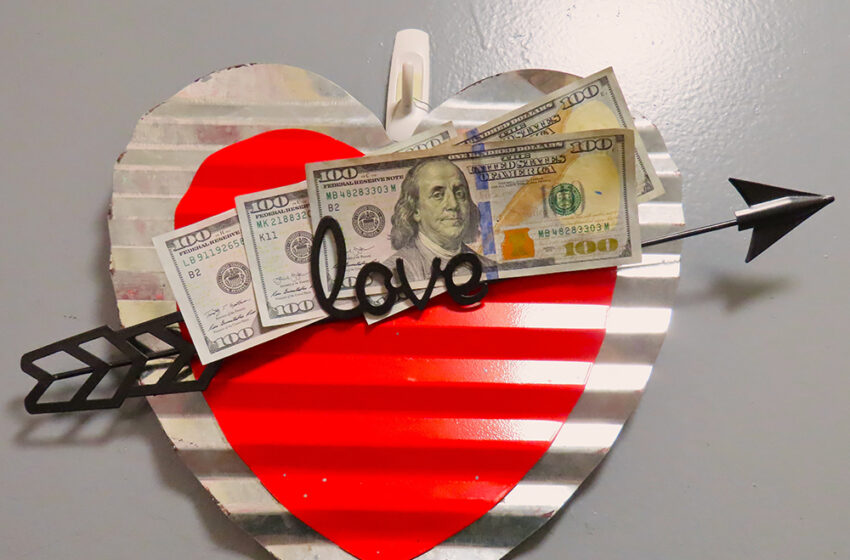
Photo by Dan Guarino.