Frosty
- Ask the DOC
Rockaway Stuff
- 0
- 2 minutes read
To begin with, urea is the main nitrogen-containing substance in mammalian urine. It is crystalline and easily dissolves in water. Urea, as measured by blood urea nitrogen (BUN), is a measure of kidney function. But BUN can be influenced by other factors, including hydration level, so BUN, along with creatinine, are used together to assess kidney function. Creatinine is derived from the muscle protein creatine and is produced in the liver.
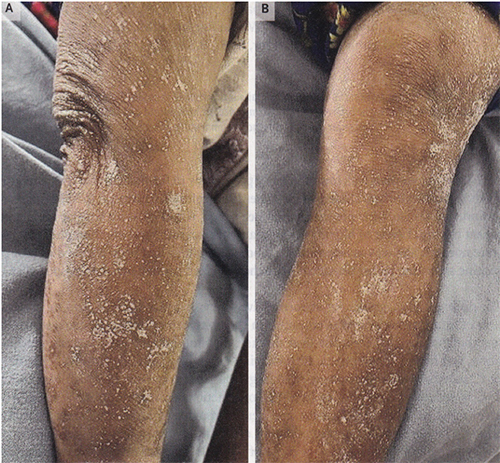
A 52-year-old woman with a history of hypertension presented to a hospital in India with a one-month history of fatigue, as well as six days of vomiting and one day of confusion. Over the preceding 20 years, she had not sought treatment for her hypertension. Physical examination was notable for pallor (paleness) of the conjunctiva (inner eye lids) and oral mucosa (mouth), as well as powdery, crystalline deposits on the arms (Panel A, right arm) and legs (Panel B, left leg), trunk, and scalp. Lab testing showed a BUN level of 134 (reference range 5 to 21), a creatinine level of 22 (reference range 0.5 to 1.5), and a hemoglobin level of 6.1 (reference range 13.0 to 16.5). Testing of skin scapings of the powdery crystals was positive for urea. A diagnosis of advanced end-stage kidney disease with uremic frost was made. The kidneys make erythropoietin, which stimulates the bone marrow to make red blood cells. When the kidneys fail, the lack of erythropoietin causes the marrow to stop red-blood cell production, resulting in anemia.
Uremic frost is a very rare (in my 45+ years of medicine I’ve never seen a case) manifestation of end-stage kidney disease that may occur when the BUN level is greater than 71. The whitish crystals form on the skin when sweat with a high concentration of urea evaporates. In this case, treatment with hemodialysis for five consecutive sessions was initiated, but 19 days after admission, the patient had a fatal cardiac arrest in the context of septic shock from a hospital-acquired pneumonia.
This case illustrates several points. First, ignoring known hypertension and not going for regular medical check-ups caused this patient to develop hypertensive kidney failure, which was both preventable and ultimately fatal. Secondly, hospital-acquired infections are a serious issue here in the US, mostly caused by staff (and visitors) failing to follow hospital infection-control policies (hand washing, gowns, gloves, masks, etc.). Apparently, the U.S. is not alone in regard to this problem. Inexcusable.
Please direct questions and comments to editor@rockawaytimes.com