Lost Pets/Found Pets: What To Do
- NEWS
Rockaway Stuff
- 0
- 6 minutes read
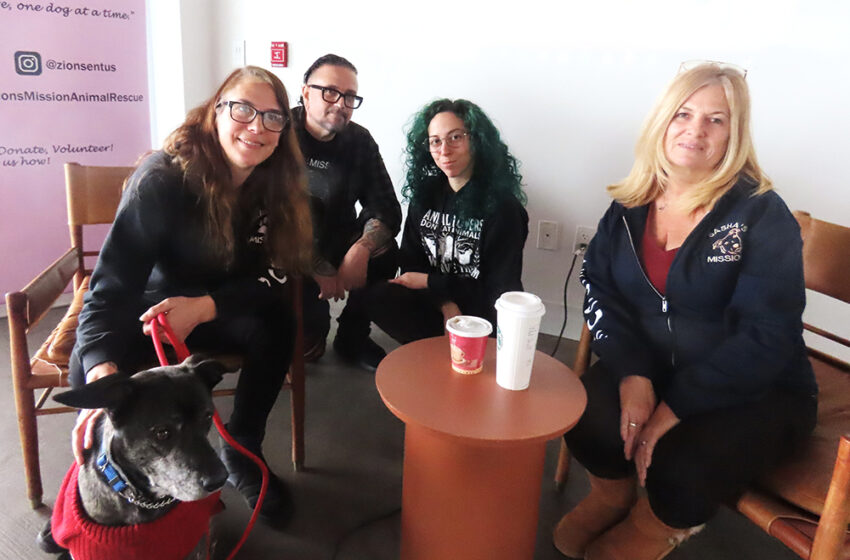
(L-R) “Prince Ali”, Sloane Quealy-Miner, Matt Miner, Maribel Cosme-Vitagliani, Kim Fraser. Photo by Dan Guarino
By Dan Guarino
Last month, non-profits Zion’s Mission Animal Rescue and Sasha’s Mission Animal Rescue joined forces to present Helping Lost Animals 101 at the Arverne East Nature Preserve. The informative workshop gave practical advice on what seems to be a growing problem.
Local Facebook pages regularly feature found/spotted lost animals. Lampposts sport photo flyers from people looking for lost dogs, cats or other pets.
These animal rescue groups, who often work together, are happy to share their experience and information on what to do/what not to do in these situations.
Sasha’s Mission President and co-founder Kim Fraser’s involvement began more than 15 years ago, helping a soon-to-be-deployed U.S. Army sergeant desperately needing to find a non-shelter home for his dog, Sasha.
“We rescue throughout NYC, especially in Brooklyn and Queens,” Fraser noted, “however we have a strong focus in Rockaway/South Queens.
“I specialize in lost dog search and rescue, and trapping. I’m a basic obedience trainer with a certification in reactive/aggressive behavior.”
Zion’s Mission President Sloane Quealy-Miner’s group has been rescuing Rockaway animals since 2010. “Zion’s Mission was created after our dog Zion passed away from cancer,” she said. Zion was one of the first outside dogs that they cared for from Far Rockaway.
Their goal is to rescue, rehabilitate, train, and find loving homes for as many abused, abandoned, neglected and unwanted animals as possible. They also provide hospice care for vulnerable, senior and ill dogs, and “we work within our community to promote responsible pet ownership and help families who are facing economic hardships pay for emergency veterinary care,” Quealy-Miner said.
Zion’s team also includes Vice President/Co-Founder Matt Miner and Director of Community Outreach and Events, Maribel Cosme-Vitagliani.
Together, rescuers Quealy-Miner and Fraser’s adventures have included staking out a cemetery, locked in over several nights, to capture a stray dog there.
Regarding bringing lost pets back home, both have several suggestions. First is going out and physically searching, not just posting online. This should be done as soon as possible.
Flyers are also very effective. The teams recommend posting these within a one-to-five-mile radius, noting some dog breeds can easily travel several miles in a day. Animals might also cross bridges, do not recognize neighborhood boundaries or even county sign markers.
Flyers should include a pet photo, preferably taken outdoors, description and name, special instructions like “do not chase” and immediate contact numbers.
Sasha’s and Zion’s Missions say searching pet owners should always keep a loop leash handy. This type easily slips over the neck, slides tight to secure the pet, and is available at most pet outlets.
It’s also good to leave scent items at the last seen location so they might return there. Expand your search gradually, keeping track of sighting locations and time of day, as animals are creatures of habit and work from their own internal clock.
Also try and recall at what times of day your pet is active, likes to roam, sleep, etc.
If you do spot your dog, “lay down,” they say so as not to scare them. “Do not chase and do not yell!” This might frighten an already anxious animal.
Or if chasing, your pet might think you are playing and give you a run for your money. Either can be dangerous for their safety, especially near traffic, and your chances of catching up or finding them again.
For lost cats, it’s important to do night searches with flashlights. Check tight and dark spaces where they often like to hide. “Knock on neighboring doors and get permission to check yards, under decks and sheds. Also do not rely solely on calling or treat bag shaking.”
“Use humane traps if needed, but this should be done by someone with trapping experience.”
If you have found what may be a lost pet, these rescue groups say, “The first thing to remember is to stay calm. The animal is already frightened, so don’t make it worse. Then, if it’s possible, bring (them) to a local vet office for a free microchip scan.”
“If they aren’t chipped, post in all local community and lost and found pages, including asking nearby vets offices/local rescues to share on their social media. NEVER give the animal away to someone else unless they show proof of ownership. If you can’t hold the animal, ask a rescue for assistance.”
“You should definitely post flyers on social media…utilize local groups and rescues as well, but do NOT post sighting information after the last seen location where they got lost.” This can lead to too many well-meaning people trying to converge on that area, further scaring the animal.
Always contact or message the owner directly. “Also, hold back some details regarding the animal if you found one to help immediately identify any potential actual owner. A person will know their companion like the back of their hand and have solid proof (like a) dog license, microchip, vet records, adoption records.”
Prevention though, Zion’s and Sasha’s Missions say, “is the first step to avoid losing your companion.”
Here they suggest breakaway collars for cats, or properly fitted collars for dogs so they don’t slip off. Tags should be clearly legible with one or two contact numbers and be the kind that rivet to the collar. Use double clip leashes for “escape artists,” and always check harnesses for snug fit before leaving the house.
“Keep updated and clear photos of your companion in case they get lost,” they said. “Microchips are life savers.” But remember to register them and keep the information on the chip updated. “Not many people think of this but ask your vet during yearly checkups to confirm the chip’s readability.”
At home, make sure screens are secure, fences don’t have holes, crawl spaces, loose boards or broken links. Keep an eye on pets outside, keep them inside when you’re not home with windows closed, and rolled up enough to prevent escape on car rides.
When it comes to lost pets, Sasha’s Mission’s Fraser says, “It’s up to us to bring them home safely. Their lives depend on it.”