The American Black Bear
- NEWS
Rockaway Stuff
- 0
- 3 minutes read

By Terri Estes
The black bear is the smallest of the three types of bears found in North America and they are only found in North America. They can be found in at least 40 States with the largest populations in Alaska, California, Maine, North Carolina, Oregon and the Appalachian/Rocky Mountain regions. There are also healthy populations located in New York, New Jersey and Pennsylvania.
Adult black bears range in weight from 100 to 400 lbs., with an occasional male topping 500 lbs. They stand two to three feet at the shoulder and are four to six feet long. They are most commonly black with a brown muzzle, but colors can vary from black to brown, blond and even grey.
The black bear has large, curved non-retractable claws and are excellent climbers. They climb trees for food, safety, and sometimes to sleep. While they have good eyesight, their keen sense of smell is often what they rely on to find food. So, when humans throw their leftovers in the garbage, it’s like setting the dinner table for the black bear. It is wise to keep garbage in a sealed trash can or shed until trash pickup when in bear territory.
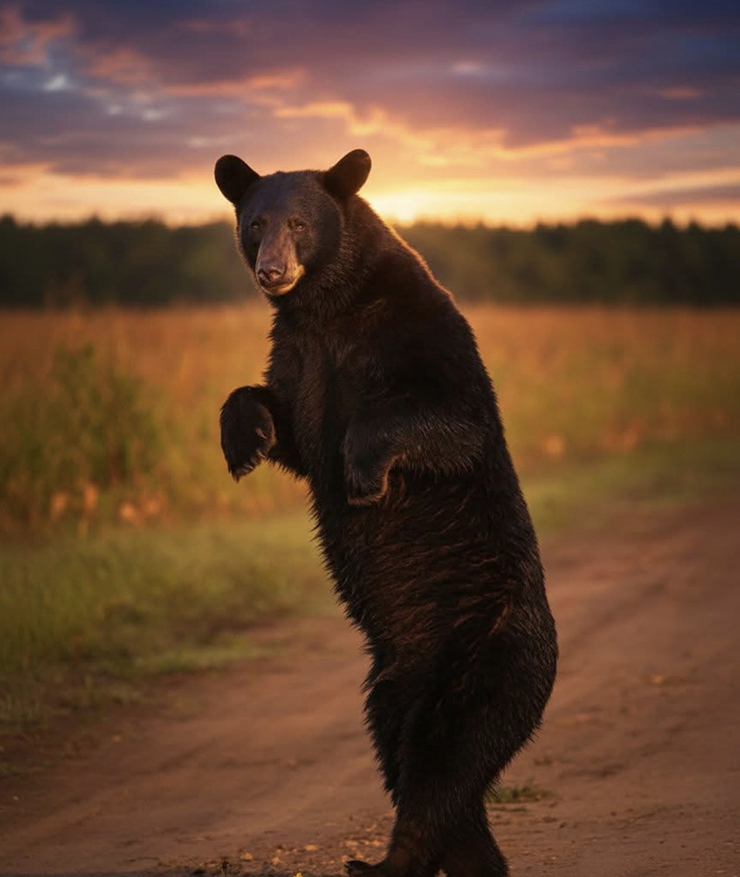
Black bears are very adaptable. They can acclimate to a variety of habitats as long as there is food and den sites. But they prefer large forests with dense undergrowth and a variety of food sources. Preferred den sites consist of hollowed out trees, caves, rock outcroppings and brush piles. Food sources include nuts, berries, acorns, insects and fruits.
The black bear gets a bad rap. Probably because, well, he is a bear and people are afraid of bears. But black bears are generally shy, solitary and cautious animals. They want to avoid human contact at all costs. However, they are also extremely intelligent. They have excellent memory and learning skills comparable to primates. The black bear learns quickly, remembers locations and can figure out how to open containers and manipulate objects to get what they desire. With this intelligence comes curiosity, and sometimes that curiosity brings them a little too close to people. This often ends up poorly for the bear.
The only predator of an adult black bear is the human. As civilization continues to encroach on our forests, more and more close encounters with black bears will occur. It is up to us to ensure that we allow the black bear to live and thrive in the forests that they have called home long before we were here.