The Snow Bunting
- NEWS
Rockaway Stuff
- 0
- 3 minutes read

By Terri Estes
Well, it’s December and the plovers, terns and skimmers have long since headed south to spend the winter in warmer climates. But fear not my fellow bird lovers, the pretty little snow bunting has arrived to grace us with its glorious presence for the winter on our shores.
The snow bunting is an arctic bird that is common throughout the Northern Hemisphere. Their breeding grounds are in the high Arctic tundra. In the summer they will nest on high rocky cliffs and ledges and will find deep crevices and holes in the rocks to build their nests. They usually lay four to seven eggs and the female will incubate her clutch for 12 to 14 days. The male will feed the female while she incubates the eggs, to ensure that they stay warm in the harsh, cold environment. After the chicks fledge and the weather gets colder, the snow buntings will travel south for the winter to Southern Canada and the Northern United States.
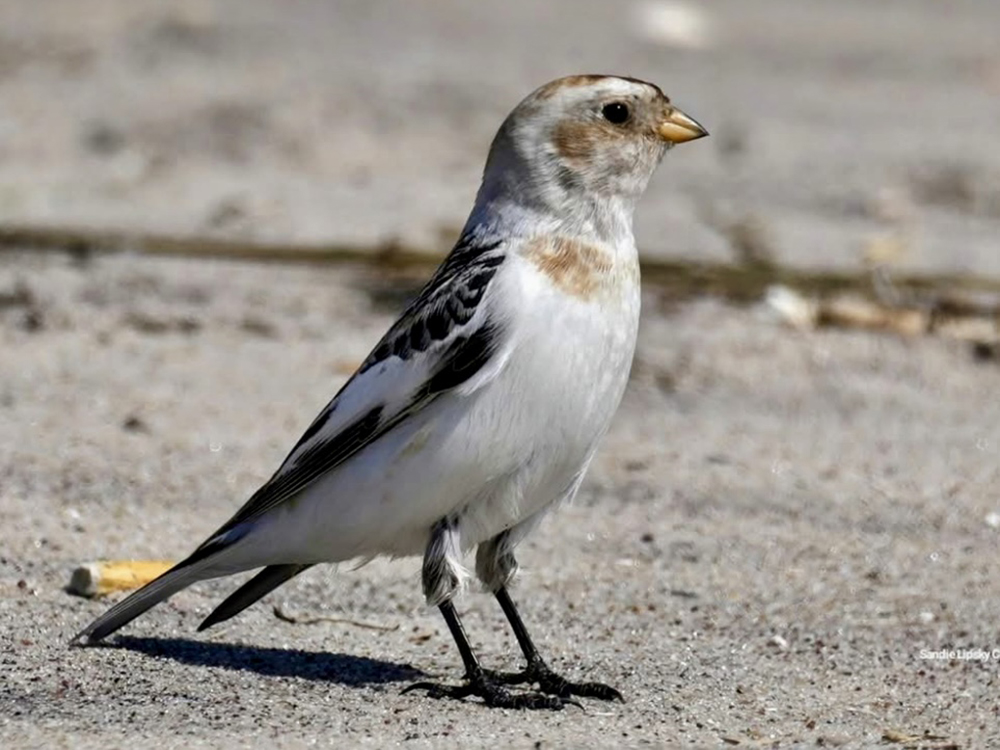
Snow buntings are stunning white and black birds, about the size of a sparrow. In the winter they acquire rusty tones that help them blend in with their surroundings. During their winter stay, they seek out open fields, marshlands and sandy shorelines to forage, which they prefer over forests and dense brush areas. Shorelines provide good camouflage, as well as a steady diet of tiny crustaceans and seeds from sand dunes, so this is a good place to spot them. The snow bunting is nomadic and will move around in flocks over the winter, traveling from place to place to find food and never staying in one area for too long.
In the springtime, this little bird undergoes a process called hyperphagia, where they increase their intake substantially in order to build up fat reserves. This fat provides energy for their long migratory flight back to the arctic breeding grounds. They also increase the size of their pectoralis (chest) muscle which is essential for long flights. Their weight can increase up to 30% before their northern migration. While they store fat for this migration, they are also incredibly cold-adapted. They can increase their metabolic rate and have been shown to maintain extremely high levels of cold tolerance during migration.
In the winters of 2023 and 2024, flocks of snow buntings were spotted on the shores of the Rockaways, especially in the Fort Tilden area, on many occasions. So keep your eyes to the sky, and on the shoreline, and let me know if you have spotted any of our visiting snow buntings!