The Southern Pine Beetle
- NEWS
Rockaway Stuff
- 0
- 3 minutes read

By Terri Estes
The Southern Pine Beetle (SPB) is a small beetle that attacks and infests pine trees. The beetle is reddish brown in color and about the size of a grain of rice. As tiny as they are, these beetles are so destructive that they are decimating the Long Island Pine Barrens, forests, and nature preserves from Eastern Nassau all the way to Montauk.
SPBs are native to the Southeastern U.S. but have worked their way up the coast and have flourished in the North due to warmer winters. They were first found on Long Island in 2014, and their favorite target is the pitch pine tree. Pitch pines are the type of pine tree that grows in the Pine Barrens, along the Sunrise Highway, and in most other open spaces on Long Island. They are pretty much everywhere on the Island, but especially dense in Eastern Suffolk County. The SPB loves them and will infest the trees and burrow into crevices in the tree and create S-shaped tunnels under the bark. This disrupts the nutrients of the tree, usually killing the tree within two to four months. This bug LOVES pitch pines, but they will attack all pines.
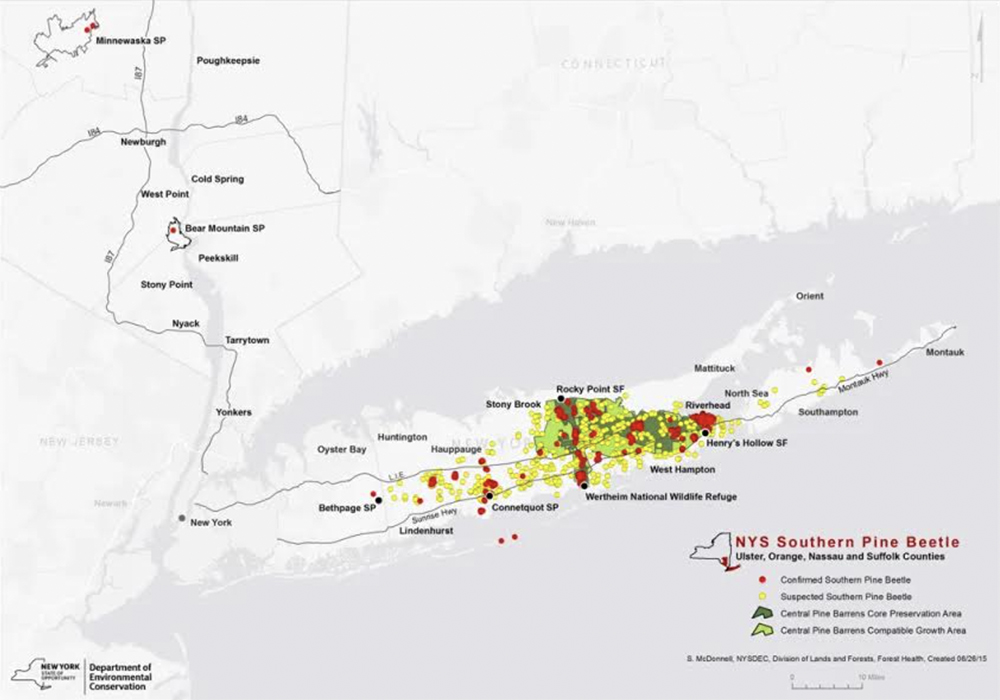
The NYS DEC has been fighting a losing battle against the SPB. They estimate that several hundreds of thousands of trees have already been destroyed. Not only is this bad for the ecosystem, but these dead trees are a huge problem. High winds can cause them to fall on structures and people. But more importantly, these dead trees are tinder. Drought conditions and heavy winds could have devastating effects this summer and fall if a fire erupts. The area of infestation spreads over thousands and thousands of acres of land, which are all loosely connected. Forest fires are a real danger for Suffolk and parts of Nassau County for the foreseeable future.
I can personally attest to the devastation of forestry and trees in Eastern Suffolk County. Great swaths of forestry, spreading several football field lengths along roadsides all over the East End, are dead. This could spell potential disaster for nearby neighborhoods, and surrounding areas, not to mention the wildlife that depend on these trees for cover, nesting and food.
The DEC is fighting these destructive beetles, but once a tree is infested, there is no chance of the tree’s survival. Right now, crews are cutting down the dead trees and putting them through woodchippers to pulverize any existing beetles and larvae. Let’s hope their efforts are enough to stop the massive destruction that these beetles are causing on the East End of the beautiful Island we all live on.