Human Trafficking Awareness
- NEWS
Rockaway Stuff
- 0
- 5 minutes read
By Theresa M Racine
January marks Human Trafficking Awareness Month, with Human Trafficking Awareness Day on January 11. Both occasions aim to create awareness and promote prevention to try to decrease such instances, but human trafficking is a year-round issue that demands sustained attention, especially when it happens all around us.
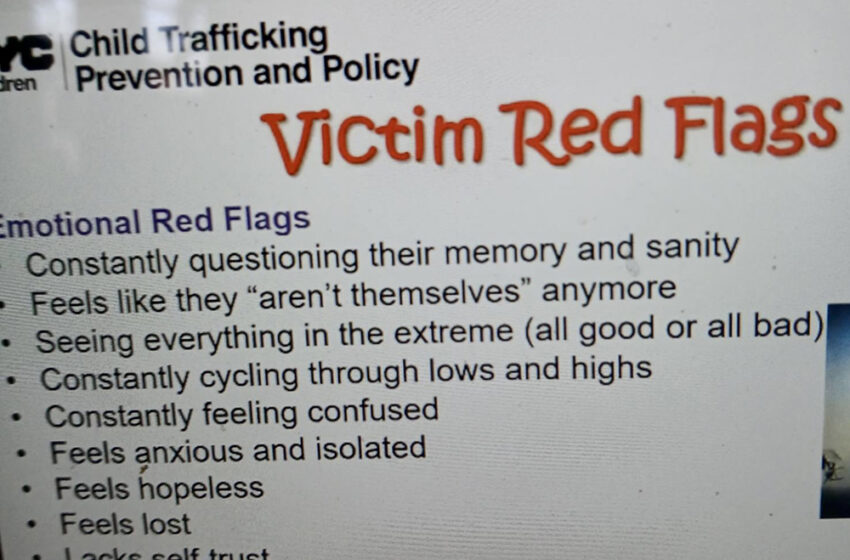
Despite the tireless efforts of numerous NGOs and organizations aimed at combating this egregious crime, New York consistently ranks as the fourth highest state for reported human trafficking cases. This month, partnering with the FBI, Homeland Security, doctors, and other organizations dedicated to fighting human trafficking daily, the Administration for Children’s Services offered informative workshops online, free of charge, for individuals seeking information. Under U.S Federal Law (Trafficking Victims Act of 2000) human trafficking is the recruitment, harboring, transportation, provision, or obtaining of a person for labor, services, or commercial sex through force, fraud or coercion. It is a form of modern-day slavery where victims are compelled to work or perform sex acts against their will. Human trafficking does not require the physical transportation of the victim across state or country lines. It can occur in any community and often involves traffickers holding victims in fear of serious harm. Under the federal law, children under 18 involved in commercial sex are considered victims as a child cannot consent to commercial sex acts.
This article is crucial for parents and guardians, as it addresses critical issues affecting minors, including digital exploitation, and potential involvement of children in illicit activities, such as edible marijuana which is a growing concern. Traffickers have been known to use the cannabis industry to promise high paying jobs. Illegal operations may produce high-potency THC-infused edibles that are packaged to look like popular legal candy. These unregulated products can be used to incapacitate or control individuals, making them more vulnerable to trafficking.
Children can also fall victim to online traps, and it isn’t just girls. On November 28, Jafet Elijah Jemmott, a local 15-year-old boy went missing after leaving his home early in the morning and boarding a bus. As we go to press, he has still not been found. His family fears he may have been lured online. Another 15-year-old boy, Thomas Medlin of Long Island, has been missing since January 9, 2026. His family believes he traveled to meet someone on a gaming platform, Roblox. Several parents are suing online gaming and chat platforms Roblox and Discord. Imagine you are home, and you believe that your child is safe in their living room, playing a simple game, but that game can lead to scary real-life consequences.

In something called the Funneling Effect, predators first contact a child on Roblox, often pretending to be minors themselves, and then quickly pressure them to move to Discord to bypass Roblox chat filters. Grooming that once started out of the house, is now beginning right in your own home. Predators can cause severe harm through extortion, along with digital product distribution like nude or AI images. Social media is also used in the grooming and the recruitment of trafficking victims and in the advertising and sales of sexual services. The internet and social media have become significant recruitment tools for traffickers, allowing them to reach and groom victims online and eventually luring them through trust.
In 2024, the National Center for Missing & Exploited Children saw a 1.325 percent increase in cyber tip line reports involving AI-generated content related to sexual exploitation. This is important to know and understand. You really need to first understand the dangers and be the parent who cares about what your kids are doing online. With the advent of the internet, the world of human trafficking radically changed. It is no longer necessary to move exploited individuals to a physical location. Now, thanks to video streaming, a victim can remain in one location and be exploited all over the world. People can see inside your house. For instance, your family walks past your camera, your car is outside, your cat, your dog, etc. Traffickers pick up on these things and exploit children by threatening their family or pets, and getting children to do what they want. A predator does not care about your child or your feelings. Their goal is always going to be supply and demand and money.
Everyone can be victims of sex trafficking. The average age of child sex trafficking victims is 13 years old, some even younger. According to agencies involved in investigating these issues, one in three boys are trafficked for torture. One in three children who run away from home are approached by a trafficker within 48 hours. For runaways that were reported to NCMEC, one in six will be likely victims of sex trafficking. If you suspect trafficking, please do not turn a blind eye, call the National Trafficking Hotline at 1-888-373-7888. Anti-trafficking advocates are available 24/7. Also, don’t forget to report to 911, and talk to your local police about your suspicions. As additional resource, the hotline for NCMEC can be reached at 1-800-THE-LOST (1-800-843-5678).
What can we all do to help? Share the hotline numbers frequently, and if you see something, say something, and do something! Educate your children about these dangers.
Teach your children to never share personal information, and avoid clicking links from strangers. And never move to unmonitored chat apps like Discord and Whatsapp.
Xtrememeasure.org founder Theresa M Racine, who is starting an advocacy meetup in February, would like to extend an invitation for a group of locals to learn and educate and advocate for people without a voice and be a voice for the voiceless. Email her at xtrememeasureactivist@gmail.com or call her at 646-408-1200 for more information. Let’s make a difference in this world through advocacy and awareness.