Humans of Rockaway: Walter Arcario
- NEWS
Rockaway Stuff
- 0
- 8 minutes read
By Shaun Smith
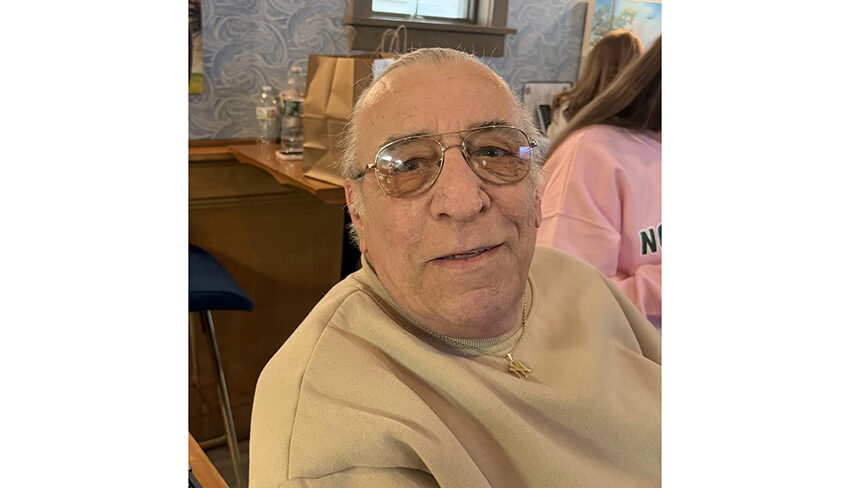
Walter Arcario was born and raised in Rockaway, “The whole thing,” he says. “I just had one brother, but the family—I don’t know, there must have been like twenty cousins—we all started here. My grandparents, they had a house on 86th Street by the Freeway, by the elevated subway. And that was like family central.” Born in 1948, he told me, “I’ve been here forever.”
“I don’t know how much you know of what Rockaway was really like,” Arcario said. “It was beyond Playland. These buildings here, from 108 to 102nd Street, that was a town. That was Seaside. That was restaurants, bars, and grocery stores with houses on the top. My father was a part-time waiter in an Italian restaurant right in the middle of that. The boardwalk: it was so many concession stands, bumper cars, and games of chance, and bars and knishes.
“I grew up in the 60s. 62nd Street to 72nd Street from the bay—Jamaica Bay, beautiful view of the airport and Manhattan—to Beach Channel Drive. The postal code is Arverne. But to those of us who lived there, it was Somerville. When this guy came from Denmark in the 1600s on a sailboat, and he docked at this bay and said, ‘Yeah, Martha, I think we’ll take this hunk of land and call it Somerville.’ And it became like a summer community with bungalows and bake shacks…I grew up in that neighborhood. Somerville was full-time people. It was cops and firemen, sanitation and postal guys.
“I went to St. Camillus for almost six years, and then I got thrown out in sixth grade,” Arcario shared. “Well, it was more of a mutual agreement. Some kid threw a spitball, and it hit the nun in the face, and I got blamed for it.” Arcario maintains his innocence. “No, I understand the statute of limitations, but I was not guilty at that particular time.” The story goes, “They wanted me to go to school for punishment on Saturday. It wasn’t really my decision. My parents had tickets for the circus for me and my brother for that Saturday. So, my mother and father came right up to the school and took me out: ‘He’s not coming to school Saturday or ever again.’ And they put me in P.S. 42. The happiest day of my life—public school…none of this, everything concerned with the missionaries and the priests—I’m all for that. I’m not opposed to Jesus and all them guys, but not a steady diet of that sh*t. Back when I went, I mean, if the nuns didn’t like you, they beat the sh*t out of you. I used to get slapped around like I was a punching bag. But I escaped from that sh*t, and I went to public school, and I loved it.”
“I joined [the Army] when I was 16, to be inducted when I was 17.” Arcario was set to graduate from Far Rockaway High School in 1966, but in 1965, he got into some trouble “with the law.”
“Listen, the keys were in there. We only went one block. It wasn’t like we were drag racing on Cross Bay Boulevard or something,” he said. Regardless, he essentially faced legal consequences or enlistment. For a young man, “It was a good decision. You carry that sh*t with you…I already had that military discipline in me when I got out of the Army. I wasn’t fanatic, but I was a good soldier. I mean, sh*t! In the middle of the Vietnam War, they send me to Oslo, Norway.”
As it turns out, service was inevitable. Not only were his grandfather and father World War I and II veterans, respectively, but Arcario’s draft number was seventeen. “I didn’t know that at the time. I was already in the Army a year when my 18th birthday hit.
“Back then, it was like inevitable [joining the military]. We moved into the projects when I was like 13. It was like a city. And that was almost like a culture shock because I wasn’t in Somerville no more…But coming into the ‘60s, the late ‘60s, the Kennedy years. That’s when we all thought there was hope because there was a nice young guy in the White House. We didn’t know Democrats or Republicans—there’s a good-looking guy in the White House with a nice-looking wife and a couple kids. We thought there was hope,” he explained. “The Vietnam War got in there and the mid ‘60s, and looking into the late 60s, there wasn’t a lot of guys left in the projects. The only guys left were the ones that had legal deferments, regardless of why—and some of them were bullsh*t—or the bad guys.” Arcario returned stateside on January 1, 1969. He was 20. “And I was done. I was done with the Army at 20 years old.”
“[Coming home] was great, man. It was—I mean, don’t get me wrong, I wasn’t on a hardship tour.” In Oslo, Walter worked in a telecommunications center. “There, really, basically, you’re a tape ape. You got a tape, you stuck it in the machine, you sent it out. I mean, it was a little more complicated than that.
“My first job [back from deployment], I was a wire clerk on the American Stock Exchange. Off the floor. It was alright…I was only there for a couple weeks, and the blizzard of ‘69 hit, and the Sanitation Department was hiring emergency snowmen. Thirteen dollars an hour, tax-free…in the Army, I was working A&P for seventy-five cents an hour.” Both rates are unimaginable in today’s New York. “You have no idea. When you’re 16 years old on a Friday night, when you get your little brown payout book. I saw a twenty-dollar bill in there one night,” Arcario said. “I thought I had gone to heaven.
“My goal at this point was a civil service job. I took all the tests…Picture this now: There’s like six of us sitting next to the fence drinking our coffee. It’s kind of snowy. Waiting to get into the school to take this test. This is February 1970. I take the test. In April, I take the physical…I go up to Portsmouth, New Hampshire, with [my wife] for vacation. We come back Sunday morning, six o’clock Sunday morning. I swear to God. We come back—we had an apartment on 48th Street—and I’m going through the mail, and there’s a letter to report that day at eleven o’clock for the medical. By August, I had the job,” he said. “I took the job and, and I don’t know. I was a Sanitation man!” He stuck with it for seventeen years, “if you get a city job and leave it, you’re an idiot, man.”
Starting in 1976, Arcario rejoined the military in the Army Reserves, where he would serve for two decades. “I was at Floyd Bennet Field. We were a core-level battalion: a signal battalion. We could set up six Western Unions in the woods. Radioteletype. Mobile messenger. Anywhere. We had the trucks. We had the generators. We had the mess hall. We had the ability to cook. All we would need is supplies, and we can do this sh*t. We trained to the standard of the active Army that does the exact same thing—which happened to be the 426 Signal Battalion in Fort Bragg, North Carolina. Our mission on the weekends is to make sure that we’ll be ready to go down for 17 days in the summer and train side-by-side with them. Be as good as them. We were good,” he said.
After 26 years, Arcario, a Chief Warrant Officer, Communication Center Specialist, Cryptotechnician, and Electronic Repairman for the U.S. Army, retired for good. “When you serve your country, your country doesn’t really ask what ethnicity you are or whatever,” Arcario said. In modern times, it wasn’t until afterwards that the United States Army actually integrated. They did it right at Fort Hamilton in Brooklyn. There was [segregated] units of Black soldiers that fought side by side…Vietnam changed all of that.”