Anti-Federalists: The Forgotten Founders
- NEWS
Rockaway Stuff
- 0
- 5 minutes read
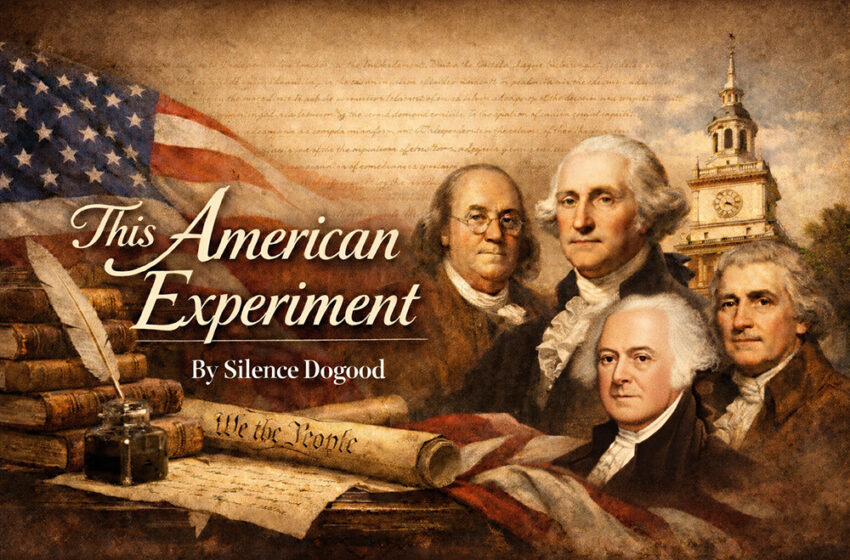
By Silence Dogood
Our view of the early days of the republic is often quite picturesque. We imagine the Founders united in agreement — on independence, on the American Revolution, and, of course, on the Constitution of the United States. This was certainly not the case. As Winston Churchill once observed, “History is written by the victors.”
After the Constitutional Convention of 1787, the finished document was sent to the individual states for ratification — and ratification was far from guaranteed. To bolster their cause, three men began writing a series of anonymous essays, published in New York newspapers, arguing in favor of the new Constitution. These essays — 85 in all — were written by Alexander Hamilton (51), James Madison (29), and John Jay (5), and would come to be known as “The Federalist Papers.”
Although they are not a legal document, The Federalist Papers are still frequently cited by federal judges today as a way of understanding what the framers had in mind when drafting the Constitution.
But why did these three proponents of the new Constitution have to work so hard to get their message out?
Because the Anti-Federalists were not going to go gently into that good night.
Before going any further, it is worth untangling some of the misleading nomenclature involved here.
The Federalists — who today might be mistakenly associated with states’ rights — were the group that believed the young nation needed a stronger central government. They supported the new Constitution. The Anti-Federalists — a label given to them, and one they did not embrace — believed the Constitution, as written, granted too much power to the federal government. Their views ranged widely, from those who believed the Articles of Confederation were sufficient to others who accepted the need for change but feared the Constitution went too far and veered toward monarchy.
While The Federalist Papers receive their much-deserved laurels to this day, there was another body of essays published around the same time that argued against ratification of the Constitution. These works, though far less organized, would later be collected and published under the unsurprising title “The Anti-Federalist Papers.”
Their movement may not be a household name, but the Anti-Federalists were made up of some very famous revolutionary leaders and Founding Fathers. Among their ranks was Patrick Henry — best known for declaring “Give me liberty or give me death” — who was an ardent opponent of ratification in his home state of Virginia. Samuel Adams, the fiery revolutionary from Massachusetts, also opposed ratification, believing the Constitution went too far in empowering the executive — a position his cousin John would ascend to in less than a decade. George Mason, who served as a Virginia delegate at the Constitutional Convention of 1787, was so dissatisfied with the finished product that he refused to sign it. Richard Henry Lee, the very man who proposed the resolution for American independence at the Second Continental Congress in 1776, also opposed ratification. Even James Monroe, the man who would become the fifth president of the United States, expressed his displeasure with the Constitution as written. These were just a few of the country’s leaders who counted themselves among the Anti-Federalists’ ranks.
While some were very public about their opposition, many Anti-Federalist works were written anonymously. Their authors used pen names such as “Brutus,” “Cato,” and “Federal Farmer,” and in some cases, their true identities remain a mystery to this day.
In the end, it is fair to say that the Federalists won the day. The Constitution was ratified, and it remains the foundational document of the nation. But the Anti-Federalists extracted several crucial concessions in the process.
Most notable among them was what became the Bill of Rights. The first ten amendments to the Constitution were not part of the original document at the time of ratification. It would take nearly two full years after ratification for the amendments to be separately approved. What the Anti-Federalists successfully did was persuade several state ratifying conventions to approve the Constitution conditionally — on the understanding that the new federal government would move quickly to amend the document and place explicit limits on the powers it had just been granted. It is their opposition and foresight that we have to thank for the guarantees of personal freedom enumerated in the Bill of Rights.
With the benefit of hindsight, many of the arguments the Anti-Federalists made have come to pass in one way or another over the past 250 years. Remarkably, many of the debates that surrounded the Constitution’s ratification are still being argued today.
These men did not go along to get along. They believed the country was heading in the wrong direction and made themselves heard with little regard for how posterity might judge them. Much of their work has been forgotten because they were not, technically speaking, the victors in this battle. Yet because we enjoy the liberties they fought for, the same liberties that play such a central role in defining what makes America what it is today, it is important to appreciate the Anti-Federalists as the unsung heroes they truly were.