Cast Off
- Ask the DOC
Rockaway Stuff
- 0
- 2 minutes read
By Peter Galvin, MD
An 87-year-old man went to the Emergency Department in a hospital in Beijing. He complained of difficulty breathing after having inhaled thick smoke from a forest fire for several hours. His respiratory rate was 29 breaths per minute (normal 12 to 14), and he had an oxygen saturation of 85% (normal 95% to 98%) while breathing room air. On physical examination, diffuse rales (crackles, often indicative of a lung infection like pneumonia) were found on lung auscultation (listening with a stethoscope), but no evidence of upper-airway thermal injury or cutaneous (skin) burns were observed. A chest X Ray showed diffuse interstitial infiltrates (haziness often seen with lung infections). The serum carbon dioxide level was normal.
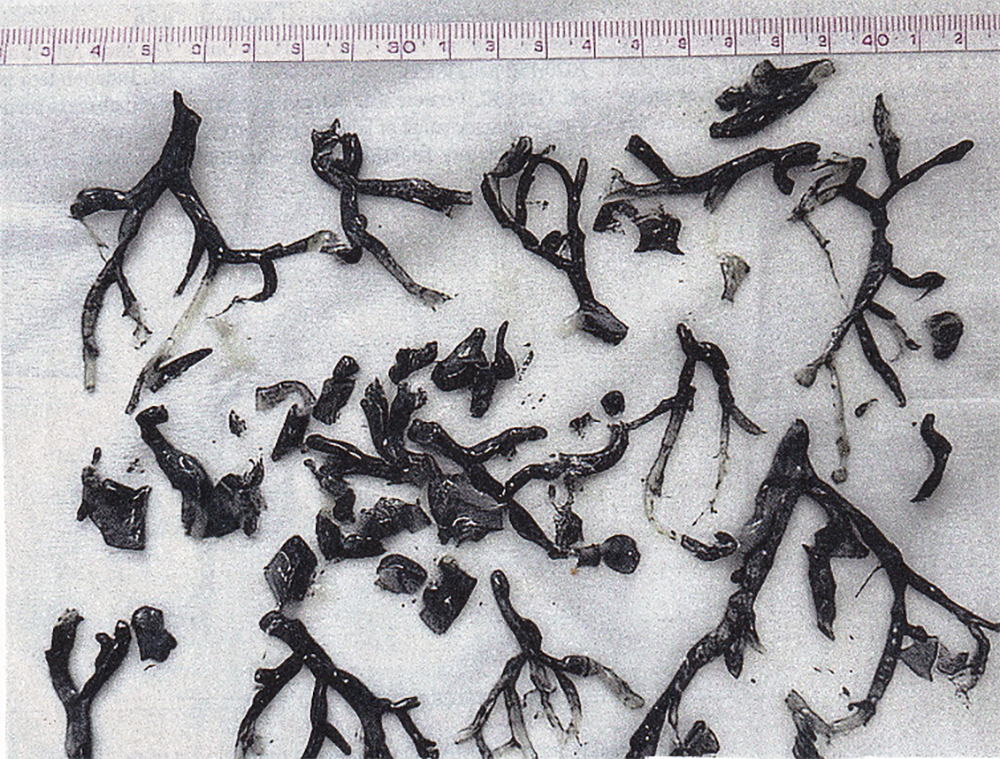
The patient’s respiratory status worsened, which led to endotracheal intubation and mechanical ventilation. Owing to elevated airway pressures and difficulty providing ventilation to the patient, flexible bronchoscopy was performed to evaluate the patency of the airways. Black casts were seen overlying the carina (the point where the trachea splits into two mainstem bronchi) and extending into the mainstem bronchi. A diagnosis of bronchial casts from the inhalation of particulate matter from forest-fire smoke was made. Multiple casts were removed using a cryoprobe (see photo). The patient was extubated three days after the casts were removed, and the patient was treated for concurrent pneumonia (to which the infiltrates seen on chest X Ray were attributed). The patient was discharged after a one-week hospital stay. At follow-up two weeks later the patient’s breathing was normal.
That must have been some impressive forest fire.
Please direct questions and comments to editor@rockawaytimes.com