NYPD Sgt. Fatally Shoots Raccoon on the Beach
- NEWS
Rockaway Stuff
- 0
- 6 minutes read
By Katie McFadden
On Thursday, January 22, an NYPD sergeant from the 100th Precinct shot and killed an erratically acting masked bandit on the beach—a raccoon. The sergeant was allegedly placed on modified duty following the shooting.
At 7:46 a.m. last Thursday, police responded to a 911 call for a vicious animal on the beach around Beach 121st Street. Later that morning, in a warning to others to be careful, a neighbor posted a video to the Friends of Rockaway Beach Facebook group of the raccoon seemingly confused, walking around in circles around the beach, even getting close to the ocean, along with photos of NYPD officers responding to the scene at Beach 125th Street, with a cage on hand, watching the animal closely. At 9:26 a.m., safety alert app, Citizens, sent out a notification for ShotSpotter technology picking up three shots fired on Beach 125th Street, but there was no follow up to the shooting incident or the outcome for the raccoon. A social media post by retired NYPD podcaster Sal Greco two days later, on January 24, gave more insight into the fate of the raccoon.
Greco’s post to X provided more detail saying, “a sergeant from the 100th Precinct was with two officers near the beach when he allegedly decided to shoot a raccoon three times…This incident was reportedly captured on body-worn cameras, and the Force investigation Division (FID) responded to the scene.” Along with the information, Greco shared a document saying the alleged recently promoted sergeant involved, Nicholas Henry, who has 18 years on the job, was placed on modified duty just hours after the shooting incident.
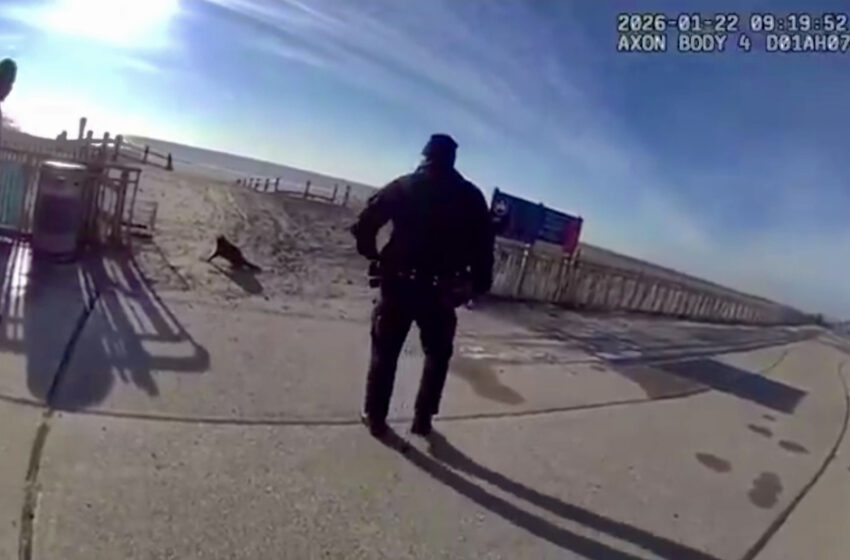
A few hours later, Greco shared the body camera footage of the incident from one of the officers on the scene. The video, taken at 9:19 a.m., shows no bystanders but two officers, including the sergeant who shoots the raccoon once near the boardwalk entrance to the beach, causing it to scream, writhe and roll over before standing on all fours again. About 30 seconds later, the sergeant shot again at the animal. An officer can be heard calling in “two shots fired at the raccoon” over police radio. About 10 seconds later, a third shot can be heard, with a follow up reported over the radio.
The Rockaway Times reached out to the NYPD press office for more information on the incident, including why the sergeant shot at the raccoon, why he was placed on modified duty and what proper protocol is. NYPD DCPI simply responded with a statement shared among other news sources, saying “On January 22, at approximately 0746 hours, police received a 911 call of vicious animal at the intersection of Beach 121 Street and Ocean Promenade, within the confines of the 100 Precinct. Upon arrival, officers observed a racoon on the boardwalk. While attempting to guide the racoon to a safe location, the animal suddenly charges towards a group of people in an aggressive manner. An officer discharged his firearm, striking the animal. There were no human injuries reported and no other persons in the vicinity at the time of the discharge.”
As the video made rounds on local social media pages, fellow officers chimed in with surprised reactions to the sergeant’s action. In a January 26 podcast on the Sal Greco Show, Greco and retired NYPD lieutenant Joel Ramirez criticized the sergeant’s actions. “What would possess someone to do something like that?” Greco said. “You wait, you call ESU, you have animal control, and you better go there with that animal cage, there’s a cage to contain the animal, but you do not engage, and I don’t believe you can just shoot one either.”
“I don’t see anyone near the raccoon. I see the beach behind the raccoon, and I see the officers around the raccoon. You call ESU,” Ramirez said. “Not at any moment did I see the raccoon attempt to cause physical injury to anyone else. This is probably why they modified him. It looks bad. You can’t just discharge a weapon at any time. We’re not in the countryside, we’re in the city.”
They then shared a document with state shooting protocol reiterating that officers can discharge a weapon “to prevent or terminate the unlawful use of force that may cause death or serious physical injury,” followed by specific prohibitions including discharging a “firearm at a dog or other animal, except to protect a member of the service or another person present from imminent physical injury and there is no opportunity to retreat or other reasonable means to eliminate the threat.”
Following the raccoon shooting, FID arrived on scene and is investigating the incident. They usually interview witnesses, officers on the scene and review body cam footage in their investigations. In the meantime, the sergeant is on modified duty as the investigation plays out.
In past incidents involving calls for dangerous raccoons across the city, NYPD’s Emergency Services Unit (ESU) was called to crate the animal, often using a catch pole to aide in catching them. They are then brought to Animal Care Centers of NYC (ACC). ACC humanely euthanizes the raccoon, no matter their condition, as they are considered to be a Rabies Vector Species (RVS) and cannot legally be rehabilitated. There are signs to look out for in rabid animals, but it cannot be confirmed until post-mortem brain testing is done.
It is not clear if the raccoon on the beach was rabid or suffering from another possible illness like distemper. According to 311, a rabid raccoon may display symptoms such as lethargy, confusion or disorientation, difficulty moving or walking/paralysis, unusual or extreme aggression, eating or chewing unusual objects, excessive drooling or foaming at the mouth and abnormal behavior, such as a wild animal that does not shy away from people. Rabies is fatal for the animal and can impact humans and other animals if bitten by a rabid animal. While raccoons are mostly nocturnal, a raccoon being out during the day does not necessarily mean it is rabid, as it could be searching for food.
Distemper shows similar symptoms, in addition to discharge from the nose and eyes, a rough coat, emaciated appearance and unusual behavior like disorientation or wandering aimlessly. Distemper is survivable but can be fatal as symptoms worsen. Distemper cannot be passed on to humans but can impact dogs.
NYC has been taking action to try to prevent rabies in wild raccoons. In October 2025, after they found 18 cases of rabid raccoons, the New York City Health Department made efforts to distribute oral rabies vaccine bait packets around Queens, Brooklyn and northern Manhattan, to vaccinate raccoons against rabies.
The NYCDOH advises people to stay away from animals behaving aggressively. If a wild animal appears to be ill or acting unusually friendly, people are advised to call 311 to report the sick animal to ACC. Call 911 if a wild animal attacks or appears likely to attack, or if it might be rabid and it is between the hours of 6 p.m. and 10 a.m. or a city holiday, as ACC is closed at other times.