Picky
- Ask the DOC
Rockaway Stuff
- 0
- 3 minutes read

By Peter Galvin, MD
As anyone who has raised kids knows, kids (and some adults) can be finicky eaters. Avoidant/restrictive food intake disorder (ARFID) is an eating disorder characterized by avoidance of specific foods and/or restriction of food intake. ARFID has three major subtypes: avoidant is characterized by repulsion from certain sensory characteristics of food; aversive involves fear of negative consequences from eating, such as choking or vomiting; and lack of interest is characterized by decreased motivation to eat.
ARFID occurs in up to 5% of the population. Although it can occur at any age, it most commonly develops during infancy or early childhood and may persist into adulthood. In children, it is more common in males than females. Those with ARFID often have anxiety disorders, neurodevelopmental disorders such as autism spectrum disorder and attention-deficit/hyperactivity disorder (ADHD), and developmental and/or intellectual disabilities. Additionally, there is likely a genetic component, as ARFID commonly runs in families.
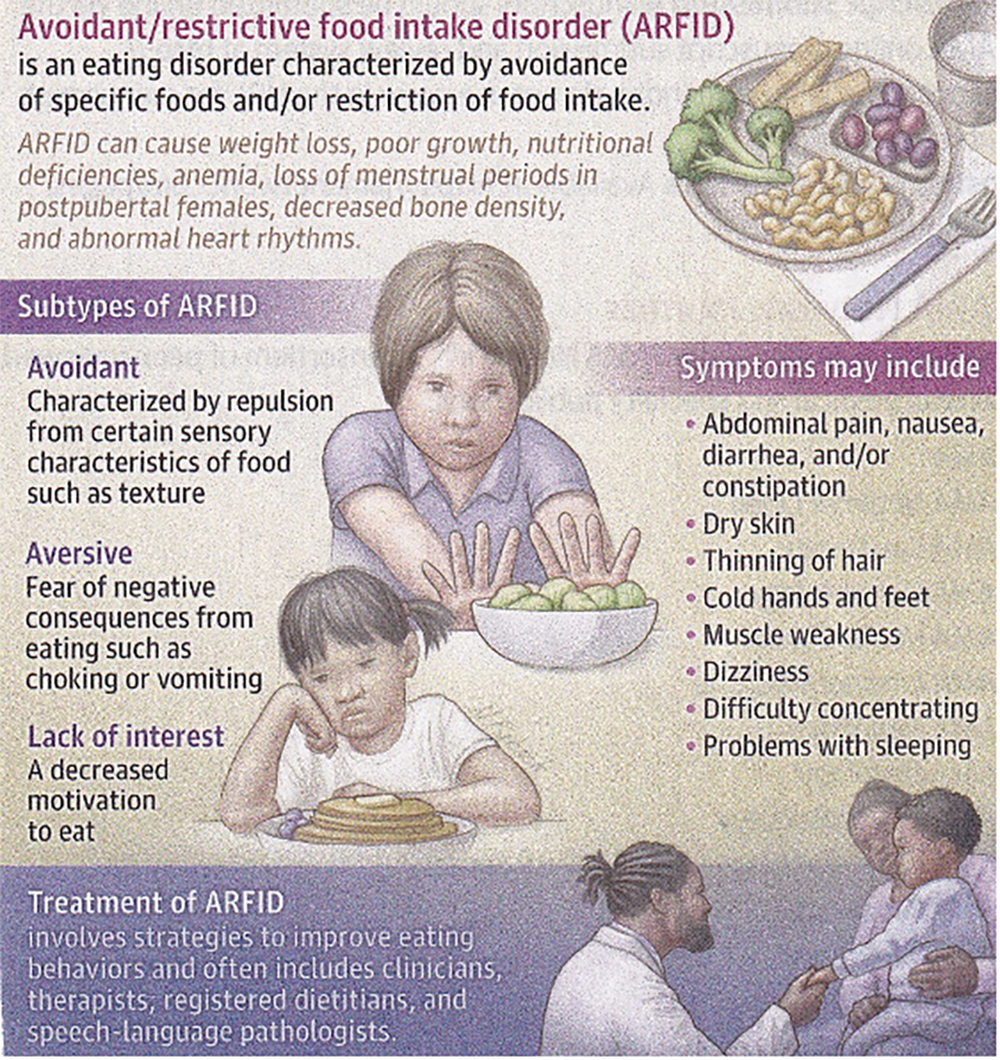
People with ARFID may have abdominal pain, nausea, diarrhea and/or constipation, dry skin, thinning hair, cold hands and feet, muscle weakness, dizziness, difficulty concentrating, and problems with sleep. Also, they may experience psychosocial distress, embarrassment, and avoidance of activities that involve food. ARFID can cause weight loss, poor growth, and nutritional deficiencies. If untreated, ARFID can lead to anemia, electrolyte imbalances such as low potassium, loss of menstrual cycles in postpubertal females, decreased bone density, and heart problems including abnormal heart rhythms.
Patients are diagnosed with ARFID if they have avoidant or restrictive eating behaviors affecting their growth, nutritional status, and/or psychosocial functioning that are not explained by other medical or psychological conditions, lack of available food, or cultural practices like fasting. Structured clinical interviews and self-reporting measures are used to assess ARFID, and comprehensive medical and psychological evaluations are needed to make the diagnosis. There are no approved drugs for treatment of ARFID, although medications can be used to treat co-occurring psychological disorders such as depression and anxiety. Treatment of ARFID includes a range of strategies aimed at improving eating behaviors, nutritional status, and dietary variety, and often involves a multidisciplinary approach that includes clinicians, therapists, registered dieticians, occupational therapists, and speech-language pathologists. Early intervention is associated with improved treatment outcomes.
Therapy-oriented approaches, such as family-based therapy and cognitive behavior therapy (CBT) have shown some promise for patients with ARFID, including improvements in symptom severity, growth parameters, and psychological functioning. Patients with severe ARFID may benefit from intensive treatment in an inpatient setting or a structured day care program. There are many organizations and websites that offer advice and help. For more information go to www.nationaleatingdisorders.org or www.acute.org
Please direct questions and comments to editor@rockawaytimes.com