Severe Autism
- NEWS
Rockaway Stuff
- 0
- 4 minutes read
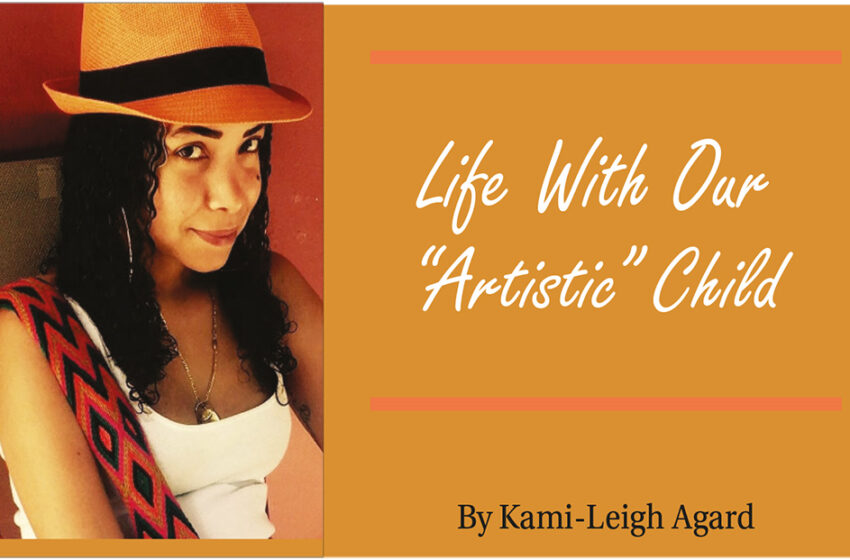
By Kami-Leigh Agard
“When you meet one person with Autism, you’ve met one person with Autism.” Dr. Stephen Shore, autistic professor of special education at Adelphi University
In a past column, I discussed if autism-centric events should be categorized according to the varying levels of autism. For example, this past December, Rockaway Beach Autism Families (RBAF) hosted a puppet show at our holiday party. Some autistic individuals’ eyes were glued to the stage, whilst others like my daughter were content to revel in their own world. RBAF’s events are open to all individuals, families and the general public. Our goal is threefold: Build autism awareness, acceptance and inclusion—wherever an individual is on the spectrum.
A Rockaway Times reader emailed the following question—What is severe autism? Admittedly, I oftentimes bristle when asked this. When I meet “high-functioning” individuals on the spectrum, I become star struck at their abilities. For example, if they attend college, is an amazing artist or even can simply read a book. RBAF’s 35-year-old board member, Joe Munisteri, is autistic, and is an author of multiple books, created his own galactic card game, “Butterfly Space Rescue,” and was a panelist at last year’s New York Comic Con, speaking on two panels about cosplay and content creation for people with disabilities. (By the way, Joe is battling colon cancer. To donate to his GoFundMe, visit: https://gofund.me/d2eba92fa)
Thus, I can’t help but wonder about my daughter. Soanirina is 17 years old, nonverbal, needs assistance with daily living skills, and I’m truly unsure if she could spell the shortened three-letter abbreviation of her name—S-O-A. Hence, when words pop up like, “low-functioning,” or “severely autistic,” I tear up. Media stereotypes of autistics as savants in movies such as “Rain Man,” or the television series, “The Good Doctor” and “Astrid,” make me wonder about my Soa. Not all autistics are savants. According to the SSM Health Treffert Center, only one in 10 autistic persons have any savant abilities, otherwise known as Savant Syndrome, let alone the prodigious skills of Dustin Hoffman’s Raymond Babbitt.
According to the National Council on Severe Autism (NCSA): “As with many issues in autism, there is no scientifically precise definition for what constitutes ‘severe.’ We consider this term to encompass those who satisfy the diagnostic criteria of the DSM-5 (American Psychiatric Association’s Diagnostic and Statistical latest Manual of Mental Disorders), and who, by virtue of any combination of cognitive and functional impairments, require continuous or near-continuous lifelong services, supports, and supervision. Individuals in this category are often nonverbal or have limited use of language, have intellectual impairment, and, in a subset, exhibit challenging behaviors such as elopement, aggression, self-injury, and/or property destruction that interfere with safety and well-being.” Organizations such as NCSA believe severely autistic individuals with greater needs and lesser functioning abilities are not getting the level of help they truly need due to a lack of resources, as well as underrepresentation in research, and many other problems. NCSA advocates for the recognition of severe autism in the DSM.
I agree that autistic individuals with more challenges should get more supports. Soa definitely needs all the help that she can get to live a functionally fulfilling life. However, as my granny oftentimes says, “We see today, but we don’t see tomorrow.” Today, my daughter may not speak, but she can ice skate, rollerblade, skateboard and snowboard, so maybe she too is a savant like Raymond Babbitt, except in her case—with board sports. And maybe tomorrow, as I pray and dream every night, that I will wake up to her cursing me out like a sailor with an explicitly rich vocabulary. Soa, forgive me for comparing you to others. You are beautiful. You are smart. You are amazing as God designed you to be. I’m blessed to be your mummy.
Share your thoughts by emailing: kami@rockawaybeachautismfamilies.
RBAF’s next family support group meeting is Thursday, April 9, 7 p.m. at Knights of Columbus (333 Beach 90th Street). All welcome! Plus, April is Autism Awareness Month, and RBAF is hosting our 4th Annual Walk For Autism, Sunday, April 26 on the boardwalk. Back walking with us are Rockaway Special Olympics and Scholars’ Academy Marching Band. Join us! For more info, visit Rockaway Beach Autism Families on Facebook/Instagram.
Join RBAF in “Turning the tide for the autism community, one wave at a time.”