Spring is in the Air
- NEWS
Rockaway Stuff
- 0
- 3 minutes read
Spring is here, and so is the mating season of many of our local wildlife species. You may notice increased activity on the shores or in open areas and parks, as mother animals seek out adequate nesting sites for their future offspring.
Young animals are defenseless. They require time with their mothers to ensure that they can thrive and survive in the wild. The amount of time this takes varies, depending on the animal.
Raccoon babies stay with their mothers for about a year. Baby raccoons are born blind and deaf. They cannot stand for about four to six weeks. Between three and four months, the mothers wean their babies. During this time, she will teach them to forage. At five months, the babies will begin to forage on their own, but they will remain in their home den until they are eight to ten months old.
You will rarely see a baby squirrel. They tend to stay huddled in their nest until about three months of age. During the first three months, their mother cares for them and teaches them essential skills. Their eyes and ears are closed until about three to five weeks. By six weeks, they will have their fur and teeth. At eight weeks, they can run, walk, and slowly climb. By the time they are three months old, they are nearly full-grown and start to venture out on their own.
Baby skunks are also born deaf and blind, and with only very fine fur. They are totally defenseless and require a great deal of care and dedication from their mother. For the first six weeks, they stay in their den. After that, they begin to take trips outside with their mother, where they learn to forage. At around two months old, they are fully weaned and begin to venture away from their birth den.
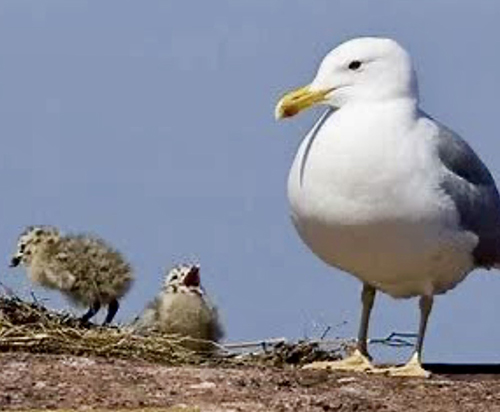
Birds are interesting. Their timeline to maturity varies greatly by species. For example, seagull babies are born covered in down. They can walk within hours and leave the nest to explore for short periods within a few days of birth. They grow rapidly and start fledging within five to six weeks. They are still fed by their parents for several months.
Robin babies are in a hurry. Their egg incubation time is only 12 to 14 days. They are born naked and blind, and both parents brood over them continuously. They are fully feathered by 11 to 14 days, and they fledge between 14 and 16 days. During the first three to four weeks of their fledgling phase, they stay close to the ground while perfecting their flying skills. Their parents still feed and protect them during this time.
Red-tailed hawk babies are born with white down and are helpless. They grow rapidly in their nests, while both parents constantly bring them small pieces of prey to consume. And, while they grow rapidly and learn to walk around their nests and stretch their wings, they don’t fledge the nest until 42 to 46 days after hatching.
As cute as baby animals are, we need to admire them from a distance. Although tempting, it is never a good idea to feed wildlife, no matter how adorable they are. We want them to fear humans, for their own good. So, let’s all enjoy this beautiful spring together with our fine furry/feathered friends, while we give them the respect and space they need to survive.