The Reluctant Revolutionary
- NEWS
Rockaway Stuff
- 0
- 7 minutes read
By Silence Dogood
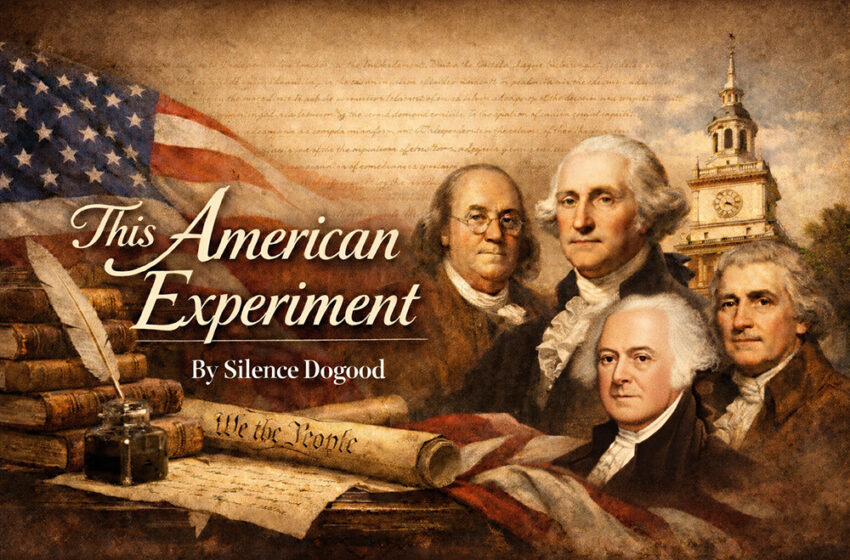
As we draw nearer and nearer to the Fourth of July and the true celebration of the nation’s 250th anniversary, I thought it might be appropriate to take a closer look at some of the lesser-known Founding Fathers who played such an important role in shaping this American experiment.
To kick off this exploration into the lives of the unheralded Founders, I decided to start with a man who, today, is most widely remembered for his refusal to sign the Declaration of Independence: John Dickinson.
John Dickinson was born in 1732 in the colony of Maryland. His family soon purchased a large tract of land in Delaware, where Dickinson would grow up. In 1753, he moved to London to study law. After completing his studies and returning to America, Dickinson settled in Pennsylvania, where he was admitted to the bar in 1757.
In 1763, the French and Indian War, or the Seven Years’ War, as Europeans know it, came to an end. This global conflict, which stretched across both Europe and North America, had taken a heavy financial toll on Great Britain. In order to recoup some of that money, the British Crown began issuing a series of taxes on its American colonies. These were the taxes that so enraged the Founding Fathers because the colonies had no representation in Parliament.
John Dickinson was one of those appalled by the taxes. In fact, his opposition quickly thrust him into the spotlight as one of the leading political voices in the colonies.
By far his most famous work was a series of twelve letters written between 1767 and 1768 that became known as “Letters from a Farmer in Pennsylvania.” These letters, written in direct response to the Townshend Acts, argued that Parliament, while indeed having the right to regulate commerce in the colonies, had no right to tax Americans solely for the purpose of generating revenue. Writing under the simple pen name of “A Farmer” from Pennsylvania, Dickinson argued that liberty lost gradually was liberty lost all the same. “Those who are taxed without their own consent expressed by themselves or their representatives are slaves,” Dickinson wrote in one of the letters.
This was a message that resonated with large portions of disgruntled Americans. The letters were reprinted in newspapers and later published together as a pamphlet that spread throughout the colonies.
In the lead-up to American independence, there were few men who possessed as much intellectual clout as John Dickinson. He was viewed by his contemporaries as one of the greatest political thinkers in America. This made him an obvious selection for Pennsylvania when it came time to send delegates to the Continental Congress.
While Dickinson firmly believed that what Great Britain was doing was wrong, he was not a fiery revolutionary along the lines of Samuel Adams or Patrick Henry. Like many others initially, he believed the goal of Congress should be to find a way to peacefully reconcile with the mother country.
In 1775, Dickinson was the primary author of the Olive Branch Petition. This was a last-ditch attempt by the Second Continental Congress, sent directly to King George III, to avoid a complete break with Great Britain. The petition was rejected by the king.
By 1776, John Dickinson found himself in a precarious position. He was no Loyalist. In fact, for the better part of the previous decade, Dickinson had been at the forefront of denouncing British wrongs against the colonies. But he still believed that declaring independence was too drastic a step. By this point, however, he was firmly in the minority.
Dickinson was not opposed to the idea outright. Rather, he felt that acting too soon, without proper preparation, was a sure-fire means of defeat.
While he was correct that there were many unanswered questions about what would happen after independence, leading voices in Congress steadily moved the colonies closer and closer toward a complete and immediate break with Great Britain.
During the heat of debate, according to later accounts, Dickinson famously warned that declaring independence without securing the other details first was like “braving the storm in a skiff made of paper.”
While this debate raged on, Congress appointed a committee of five to draft a declaration of independence. One day later, Congress created a committee of thirteen to form a government. John Dickinson was chosen as chairman of this committee. That committee would go on to produce the Articles of Confederation, perhaps Dickinson’s most important contribution to this American experiment and one we discussed at length in these pages a few months ago.
On July 2, 1776, when Congress was finally set to vote on the adoption of the Declaration of Independence, Dickinson remained absent from Congress. He knew the document needed to appear unanimous, and so instead of casting a vote against it, as his conscience urged him to do, he chose to remain elsewhere and allow Pennsylvania to vote with the rest of the colonies in favor of the historic document. One month later, he also refused to sign the Declaration.
What happened next is perhaps one of the most underappreciated moments in the nation’s founding.
Dickinson resigned his seat in Congress and joined the Pennsylvania militia. He might have disagreed with the decision, but once it was made, he was determined to support his country to the fullest. After first serving with the Pennsylvania militia, Dickinson moved to Delaware and served with its militia as well.
When the war finally ended, John Dickinson continued his public service. Even though he had suffered a reputational blow by not signing the Declaration, he still managed to regain the admiration and respect of his constituents. Dickinson would go on to serve as president — yes, president. Today we would call the position governor, but this was before the ratification of the Constitution that now governs us — of both Delaware and Pennsylvania.
After the war, it became increasingly clear that the Articles of Confederation, which John Dickinson had played an immense role in drafting, were insufficient for governing the new United States. Several states met to discuss how this problem could be corrected at what is now known as the Annapolis Convention. Serving as president of this precursor to the Constitutional Convention was none other than John Dickinson himself.
Dickinson would go on to represent Delaware at the Constitutional Convention and sign the United States Constitution. Delaware would also become the first state to ratify the new governing document. (In a strange twist of fate, Dickinson was actually too sick to sign the Constitution himself, and so a fellow Delaware delegate was authorized to sign his name for him.)
John Dickinson died on February 14, 1808. Upon hearing of his death, President Thomas Jefferson referred to Dickinson as “among the first of the advocates for the rights of his country when assailed by Great Britain” and called him “one of the great worthies of the Revolution.”
Because he did not sign the Declaration, John Dickinson is often — and understandably — overshadowed by some of the more dramatic and revolutionary figures of the founding. Not all patriots were eager radicals. Some, like Dickinson, feared both British tyranny and reckless revolution. But in the final years of the colonies and the early days of the United States, few men played a larger role in both resisting Britain and designing the first framework for this American experiment.