Rockaway Comes Together for Dune Native Planting
- NEWS
Rockaway Stuff
- 0
- 3 minutes read
By Juvie Anne Alfeche,
RISE Public Programs Coordinator
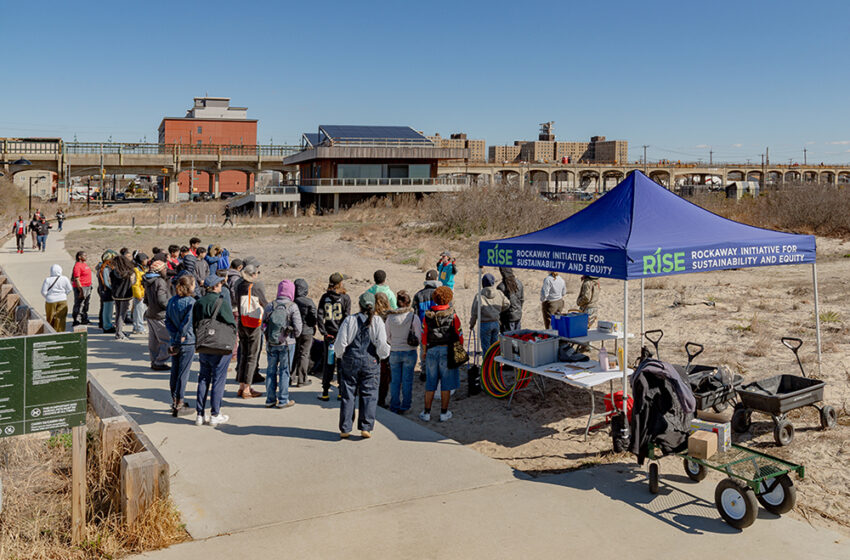
On a Saturday in April, community members gathered with RISE (Rockaway Initiative for Sustainability and Equity) for an event focused on restoring the dunes, and you are invited to continue the momentum at the next planting on Saturday, May 9!
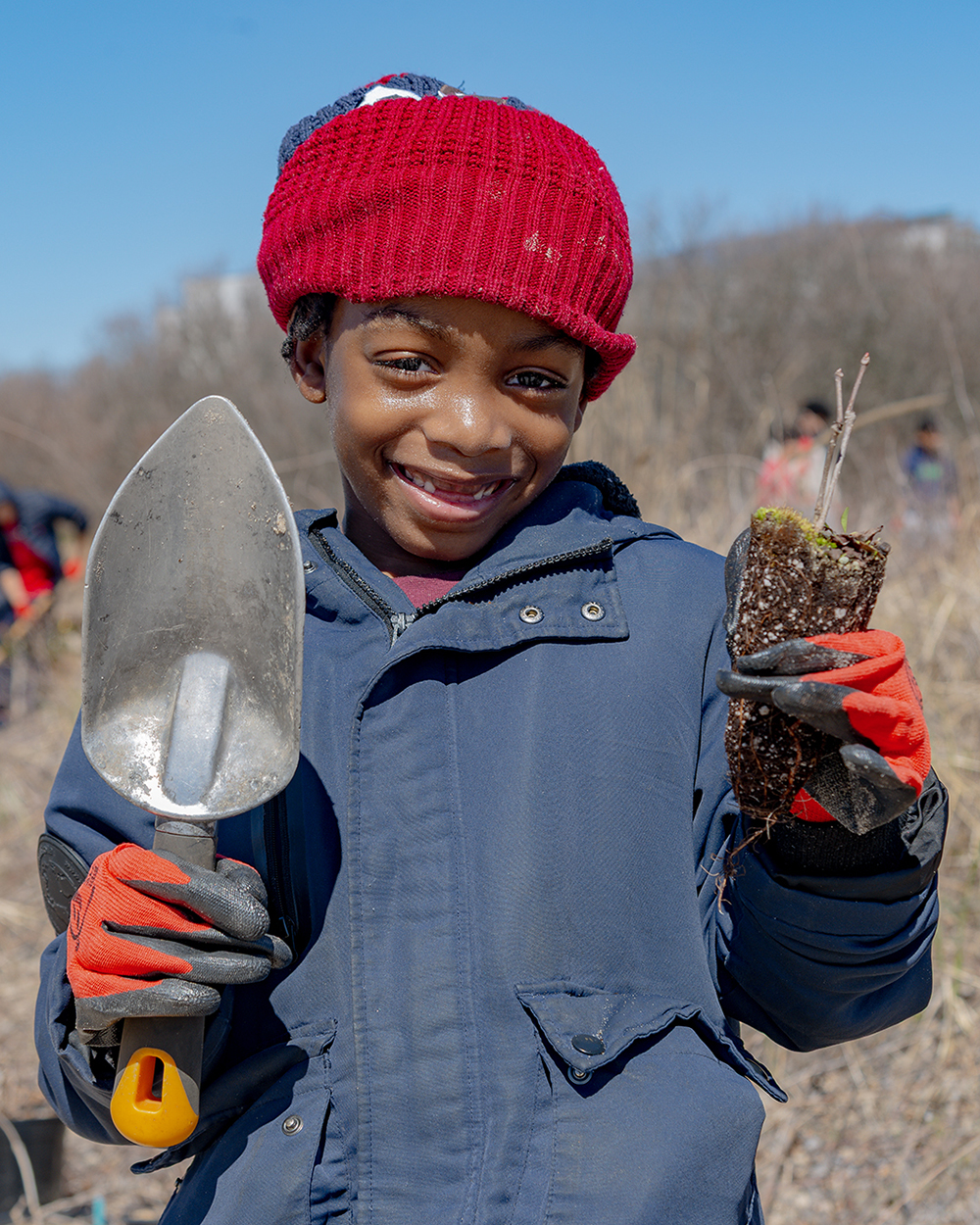
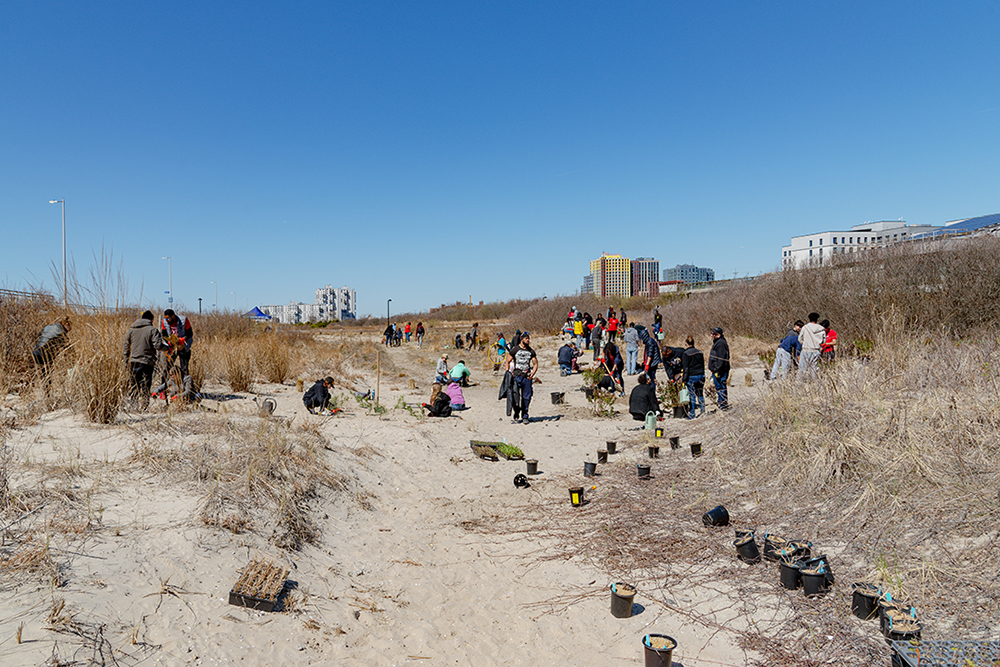
Volunteers of all ages came out to lend a hand along the northside of the boardwalk, between Beach 42nd Street and Beach 44th Street. They worked together to introduce a diverse range of native plants, which will support the area’s ecosystem for years to come.
The sun shone brightly, and it was a perfect spring day as participants planted, learned, and connected with one another. The planting was part of “Greater Rockaway” Coastal Resilience Plan, a project focused on restoring the peninsula’s shoreline by creating a more biodiverse habitat. The plan prioritizes native plant species because they are naturally adapted to the local environment and play a critical role in supporting wildlife and stabilizing the sand dunes.
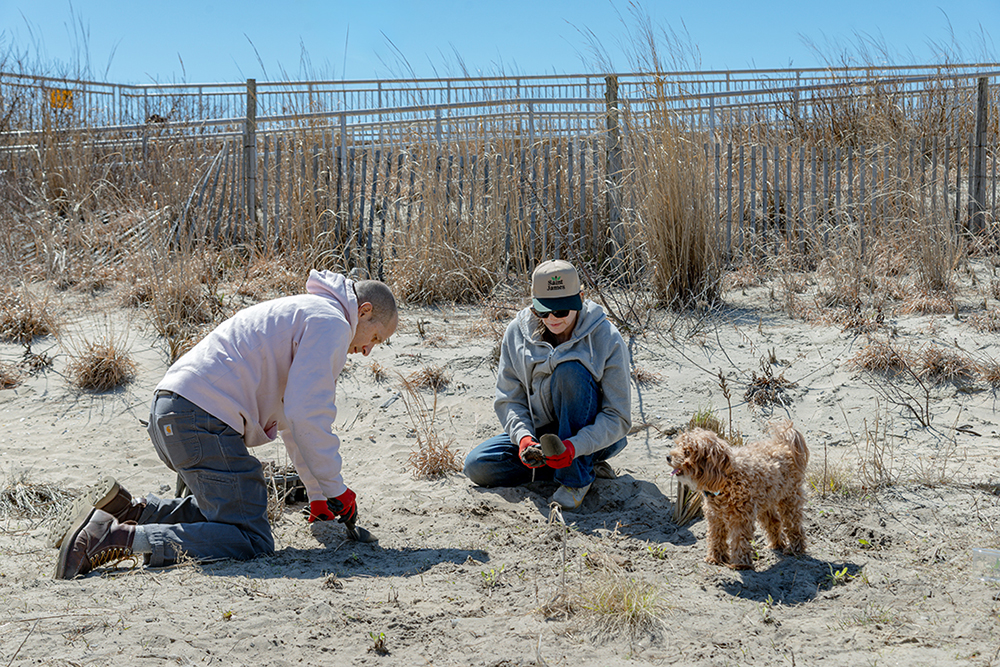
Volunteers put in a variety of trees, shrubs, grasses, and wildflowers. Among them were pitch pine (Pinus rigida), Northern bayberry (Myrica pensylvanica), and several types of sumac, including smooth sumac (Rhus glabra), fragrant sumac (Rhus aromatica), and winged sumac (Rhus copallinum). Sassafras were also added, bringing seasonal color and ecological value to the area.
Ground cover and climbing plants like Virginia creeper (Parthenocissus quinquefolia) were included alongside native grasses, such as broom sedge bluestem (Andropogon virginicus), purple love grass (Eragrostis spectabilis), bitter panic grass (Panicum amarum), little bluestem “Long Island ecotype” (Schizachyrium scoparium), and Indian grass (Sorghastrum nutans).
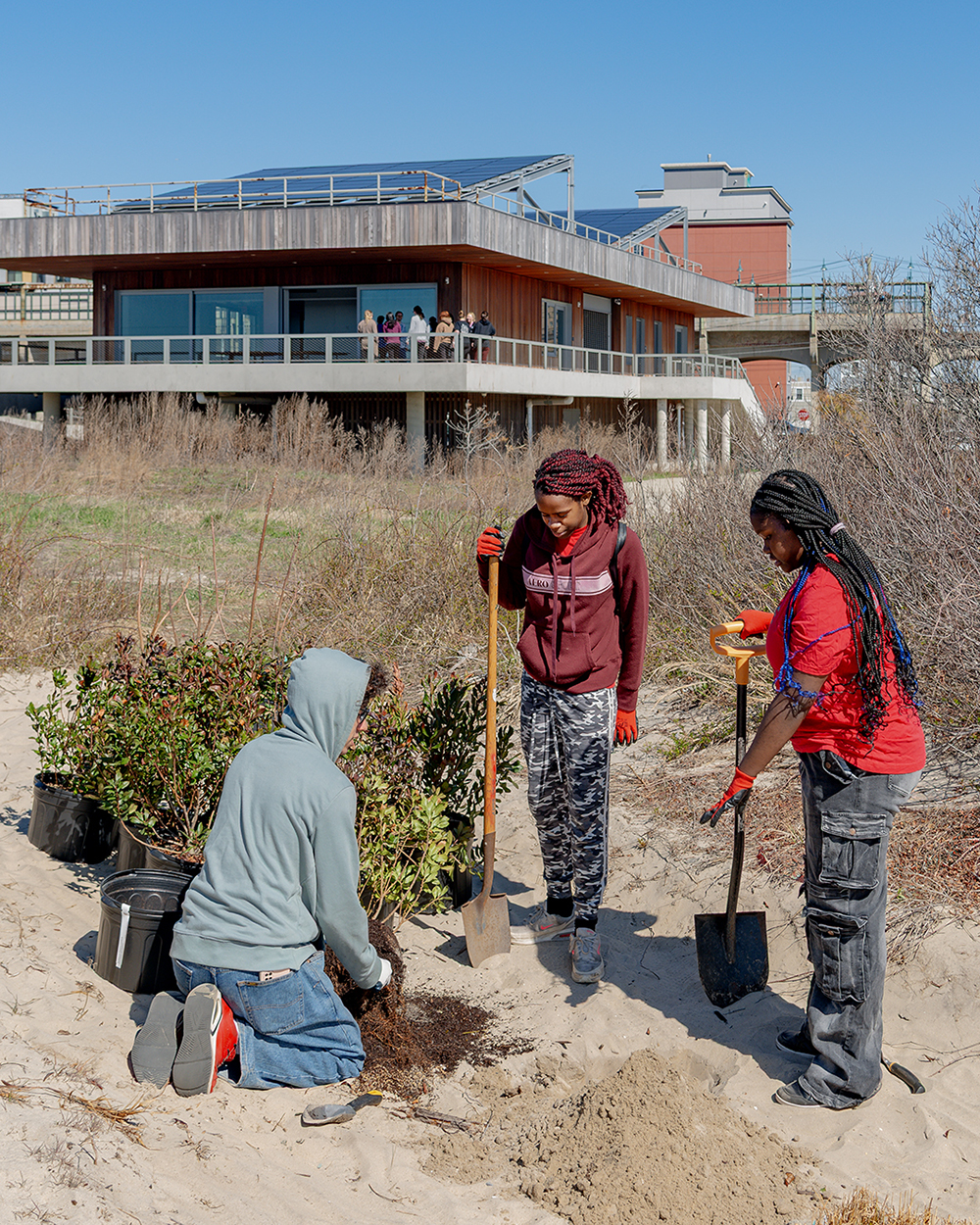
The planting also featured a vibrant mix of wildflowers and pollinator-friendly species. Several varieties of goldenrod, including seaside goldenrod (Solidago sempervirens), wrinkle leaf goldenrod (Solidago rugosa), early goldenrod (Solidago juncea), and gray goldenrod (Solidago nemoralis), will provide important late-season color and nectar for pollinators.
Together, these trees, shrubs, grasses, and wildflowers will help stabilize the sand, reduce erosion, create a thriving habitat for birds, bees, and butterflies, buffer storm surges, and reduce flooding, which is an increasing challenge in Rockaway as climate change intensifies.
National Fish and Wildlife Foundation is a supporter of the next planting on May 9, to which all are welcome! Please register in advance at www.riserockaway.org.