Humans of Rockaway: Ricky O’Neill
- NEWS
Rockaway Stuff
- 0
- 7 minutes read
By Shaun Smith
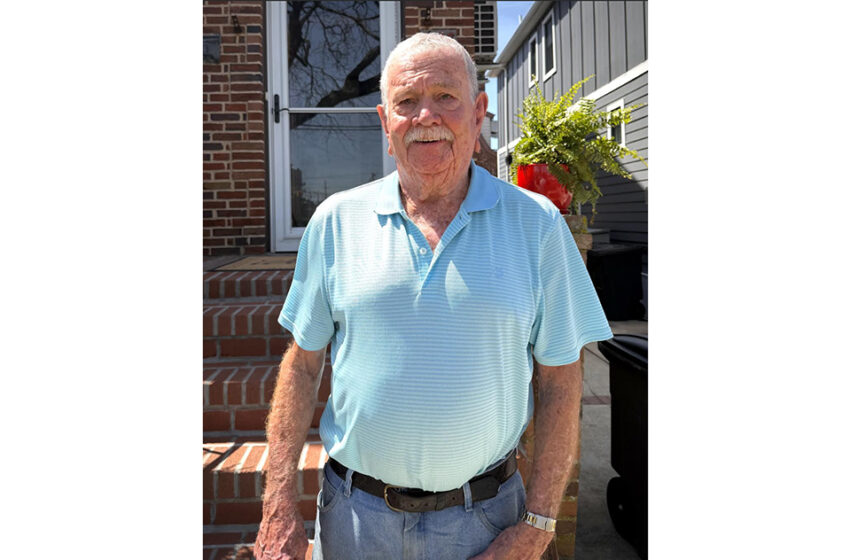
“I was born in the Bronx, but we moved out here and stayed in the bungalows on 105th Street from day one. We’ve been living down here since then. We lived on 130th for a while, but have been in this house for, I don’t know, 50 years.” Ricky O’Neill invited me to sit with him in his living room this weekend: royal-blue chairs, blue nautical wall furnishings, and a warm sense of familiarity and comfort. Ricky is a calm, quiet man, his life told through the lines in his face, radiating from his eyes. “Well, you know, with the beach, we were always surfing and the like … fishing too. Just growing up, y’know, basketball at St. Francis … what else do you do in Rockaway? I was a bartender.” He began listing old Rockaway joints from before my time: Sullivan’s, Fitzgerald’s, McNulty’s.
“Did I have a boring life? God … I mean.” O’Neill chuckled as he reminisced on a full life in Rockaway through bits and pieces of stories.
“I started working at Howard Johnson’s at Riis Park when I was 14 years old.
“I lived in Hawaii for a while, in 1970. To surf. Me and some other people from Rockaway, we got a house, and we stayed out there for a while.
“I worked up in New Hampshire driving a tractor up there on an apple orchard. Someone’s gotta pick up the apples. We spent picking season up there for three years. We lived in a bunk-house that wasn’t heated until it got too cold. And then that parlayed out because I was driving a tractor, so working for the city, working for the parks department, I knew all the heavy equipment. That was a plus.”
O’Neill spent the majority of his professional life working for the City and Federal Parks Services. “I worked for the parkies—the city parks—for a long time. I guess from when I was 16 years old, when you are able to start, until like 20 or 22 or something like that. And then the National Park Service, I worked there for 50 years,” he said. When he started, the bureaucracy of Parks management was not what it is today. He had more freedom, more funds, and more manpower.
“I was a facility manager for Gateway, so I had to be, y’know, in virtually everything,” O’Neill said. “When I started working, they had these unlimited funds, we were able to buy all this equipment. They didn’t have anybody hired—I was the first one to get hired—and I hired probably all of the people from Rockaway who worked there. This was in 1974. The civil service laws didn’t apply to Gateway in its inception, so we were able to hire, I don’t know, half of Rockaway that wasn’t working. A lot of people weren’t working in Rockaway at the time, but we got them all working. I lasted there for 52 years.”
His work was fulfilling and, most of the time, exciting. “I loved it. I mean, first of all, it’s local.” O’Neill joked that one of the only people he had to take flak from was my dad, who reported whenever a tree was downed, or if he thought something needed work on his morning walks. O’Neill continued, “It’s good and bad being a local person and working and having this responsibility of Riis Park, Fort Tilden, Floyd Bennett, it was a lot. Floyd Bennett Field is like its own city. It has every utility you could possibly have, you have police departments, the Marine Corps. There wasn’t one day that was quiet—you know what Riis Park looks like in the summer.”
As the years went on, many of the aspects of the job he loved were whittled down. “At that point, though, we were able to hire people; now it’s gotten terrible. The government freezes—it got silly,” O’Neill said. “That was one of the reasons I got out. It got to the point where we couldn’t hire anybody. People were leaving, retiring, and we weren’t able to fill their spots. We were down to a skeleton force.”
O’Neill is “happily retired,” as of September 2025.
“It’s interesting. Do I miss work? Yeah. It’s something that you get used to doing. I still get up at 3:30 every morning, I just can’t help myself. I get up at 3:30. You get used to something you’ve been doing your whole life. People think it’s strange, I think they see me up at 3:30 in the morning and go, ‘what is he doing? He’s not working anymore,’ I’ve heard that one.”
What does Ricky do now that his mornings are wide open? Weather permitting, he bikes. “‘There’s a crazy person riding a bicycle down to Riis Park every morning!’ I’ve heard that from a few people; they’re wondering, ‘Who’s that man that’s out at that time?’ You’d be surprised, though, there are a lot of things you can do at 3:30 in the morning without anybody around to bother you.”
In retirement, Ricky and his wife, Marybeth, have been able to travel. They spend a few weeks in winter in Florida. “My wife makes sure I have plenty of things to do. All the things on the ‘Honey do’ list are now being done,” O’Neill said. Mostly, though, they enjoy the company of their children and grandchildren. He relishes the opportunity to watch his grandchildren come of age in the same place he did. The biggest difference? “It’s funny. Basketball is such a big thing and always has been. Soccer, though, is bizarre … well, not bizarre, but for us it is because that wasn’t something that we grew up playing. The schoolyard was big, though: there were handball courts, and we’d play stickball. Volleyball, too, was not a big thing, not like now. We had rugby, though. The Rockaway Fisheads down in Fort Tilden always were around. I wasn’t really a part of that, though … too busy surfing. And fishing.” Really, I guess not much has changed.
“After Sandy, everyone got a lot closer than they were prior to that. For survival, if nothing else. We’re a very close community,” O’Neill said. Despite the tragedy and destruction of October 2012, the sense of community and solidarity in its aftermath was palpable and enduring. It is rare to hear an account of Sandy unaccompanied by immeasurable acts of kindness and generosity. I asked who some notable people in his life are. “Joe Featherston,” he said, without hesitation. “He was up there in New Hampshire, picking apples with me. I’ve known him since our first day with the Parks Department. We were 16 years old,” O’Neill shared. He also named John Killcullen, Bryan Collier, and Adam Smith—some of his dear and decades-long friendships. Rockaway friendships stand up to the test of time.
“That’s pretty much it. That’s my life,” Ricky O’Neill told me. He shook my hand, smiled warmly, and walked me out.
To nominate someone for Humans of Rockaway, reach out to aah.shaun@gmail.com.